
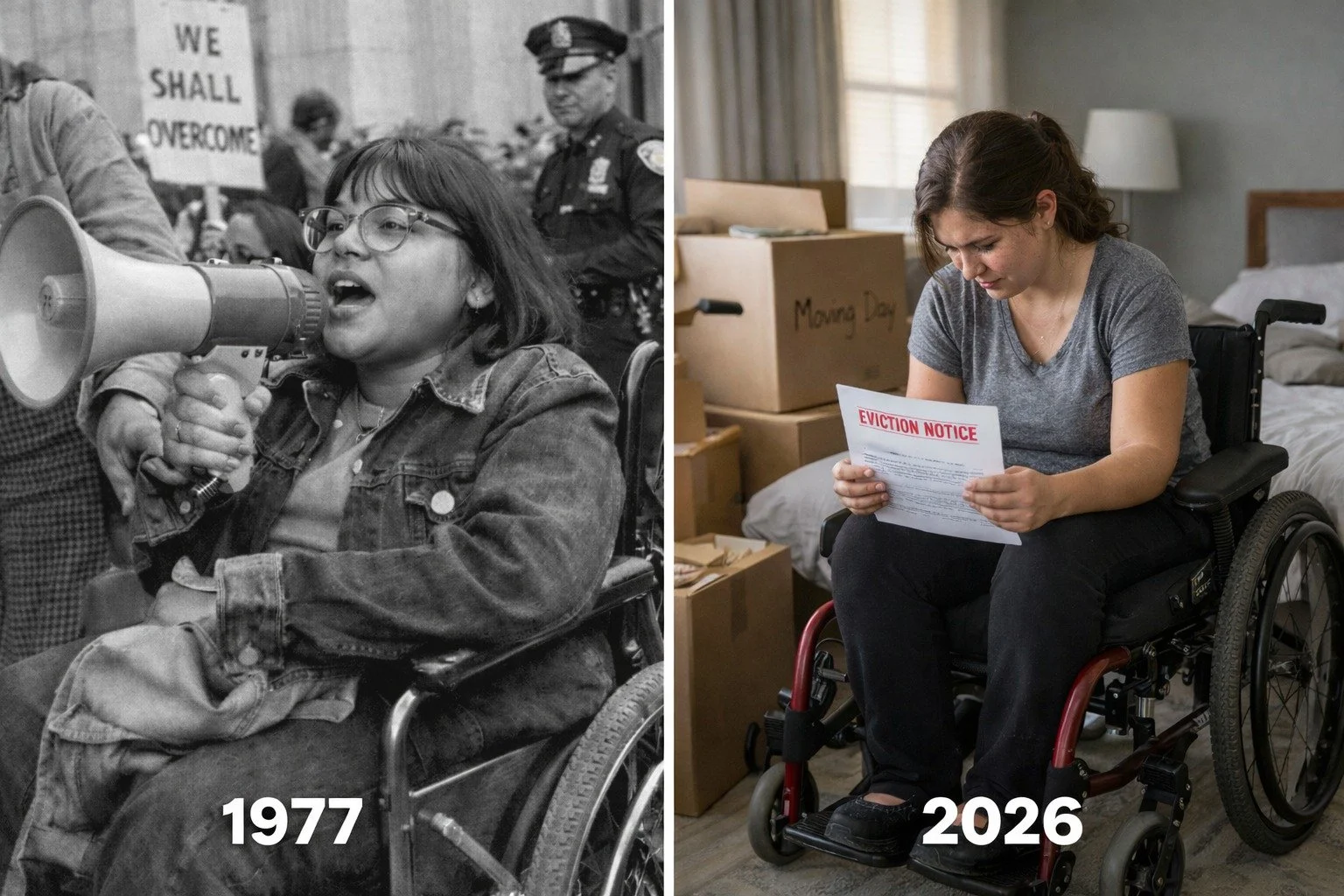
New Integration Rule Sparks Debate:
Many Advocate for More Choice, Some States Seek Fewer Consequences
By Heather M. Burroughs, Parent & Professional
January 30, 2026
Decades ago, people with disabilities and their families fought for basic civil rights.
Those fights led to protections like Section 504, the ADA, and the Olmstead decision, so people would not be forced into institutions simply because states failed to build real community options.
At their core, these laws were meant to guarantee one thing:
An institution should never be the only viable choice.
Right now, two different perspectives are colliding — and they are not the same.
Together for Choice (TFC) has been calling out a real problem. The HCBS Settings Rule and Olmstead are sometimes interpreted in ways that limit, rather than expand, real options.
Families see people discouraged from living with other disabled housemates, planned or intentional communities treated as “presumptively institutional,” and housing subsidies threatened based on where or with whom someone lives.
This is not what Olmstead intended.
Integration was never meant to mean isolation or for inclusion to be forced. It was meant to mean the most integrated setting a person chooses that meets their needs. TFC is pushing for these rules to be modernized so viable housing options are not blocked in a world where there simply are not enough places to live.
(You can learn more about Together for Choice here: https://togetherforchoice.org.
At the same time, nine states are suing the federal government over a 2024 update to Section 504. The update clarified that putting someone at serious risk of unnecessary institutionalization can violate civil rights law.
Those states argue they don’t have enough housing, staff, or infrastructure to meet this standard and don’t want to face penalties when people end up in institutions. Disability advocates worry the lawsuit could weaken civil rights enforcement and make it harder to challenge unnecessary segregation.
New York is not one of the states in the lawsuit, but the outcome could still shape how these protections are enforced nationwide.
(A clear, non-sensational overview of the lawsuit is here: )
Both sides are reacting to the same reality:
There are not enough community living options for people with disabilities
But intent matters.
TFC is pushing for more choice.
The lawsuit is pushing to reduce accountability without fixing the underlying gaps.
PLEASE WEIGH IN.... Many feel the answer is not fewer civil rights protections. Instead, many advocates believe the answer is modernizing how Olmstead is implemented, supporting shared and planned housing, and ensuring benefits follow the person — so community living is a real option, not a theoretical one.